
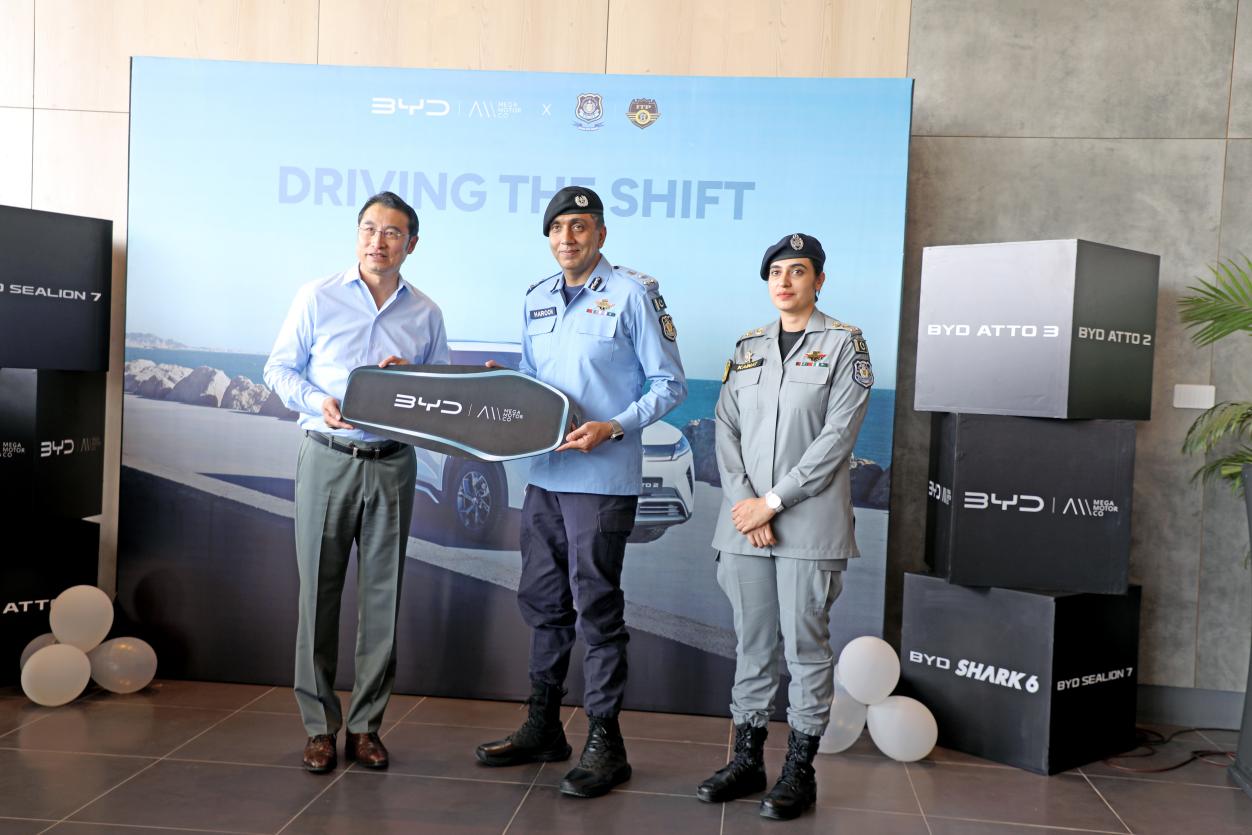
The recent delivery of 25 electric vehicles (EVs) by BYD to the Islamabad Capital Police and Islamabad Traffic Police represents a significant pivot in Pakistan’s public sector fleet management. This isn't merely a procurement contract; it is a scalable blueprint for urban sustainability. The deal, which covers an order of nearly 100 EVs—with 58 units already deployed—utilizes high-performance models like the Sealion 07 EV and ATTO 2. For a police force balancing 24/7 operational requirements with the need for fiscal discipline, the transition to EVs offers a compelling value proposition: lower operating costs through reduced fuel expenditures, minimal maintenance overhead due to fewer moving parts compared to internal combustion engines, and a drastically reduced carbon footprint.
The economic logic behind this adoption is supported by strong metrics. BYD has demonstrated a rapid market penetration in Pakistan, moving nearly 10,000 units since entering the market in March 2025. This rapid growth is a response to Pakistan's pressing need to mitigate the macroeconomic impact of imported petroleum, which remains a massive drain on foreign exchange reserves. By shifting public sector fleets to battery-electric platforms, the government is effectively hedging against volatile global oil prices and aligning with global decarbonization standards. As noted in detailed coverage from People's Daily, the integration of these vehicles is part of a broader, technology-led strategy to optimize municipal services.
Looking at the technical and operational side, the deployment of 100 EVs for law enforcement provides a real-world testing ground for performance, range, and reliability under local conditions. The efficiency gains here are multi-dimensional. Beyond the obvious fuel cost savings, these vehicles provide immediate torque and lower operational noise, which can be tactical advantages in urban policing. Furthermore, the partnership signals a mature phase for the Chinese EV supply chain in South Asia, where manufacturers are not just selling vehicles but are actively supporting the development of charging infrastructure and technical service networks. As Pakistan continues its electrification journey, the success of this police fleet will serve as a crucial benchmark, likely driving further adoption across private and public sectors as the cost per kilometer continues to decline in favor of electric mobility.